World Economic Forum
Case studyArts & Culture
Opening up the world’s leading museum of art and design
The V&A is the world’s leading museum of art and design. It holds 4.5 million objects spanning 5,000 years of human creativity. Made by Many partnered with the museum on an ambitious digital transformation, using our making-based approach as the vehicle for change.
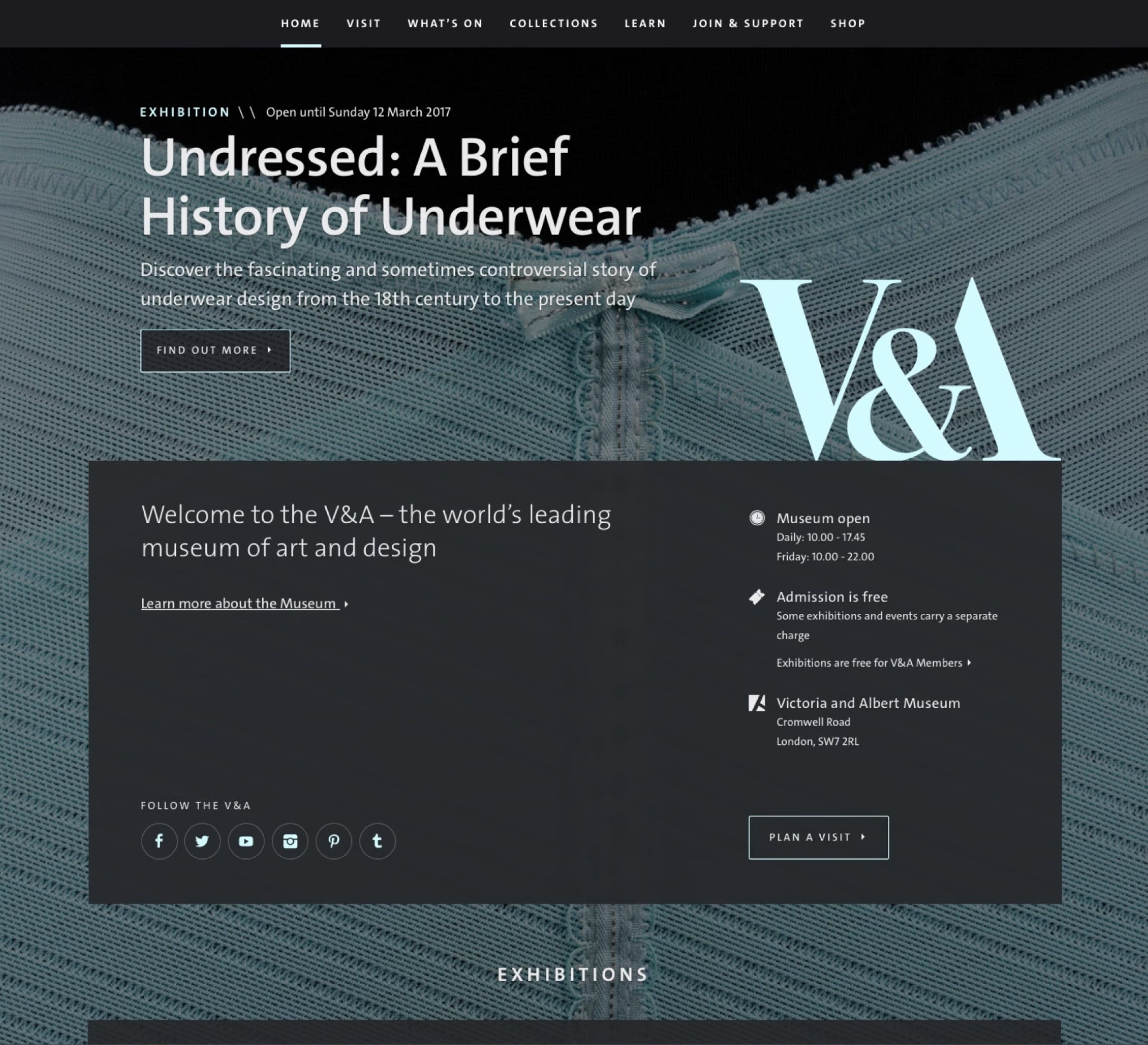
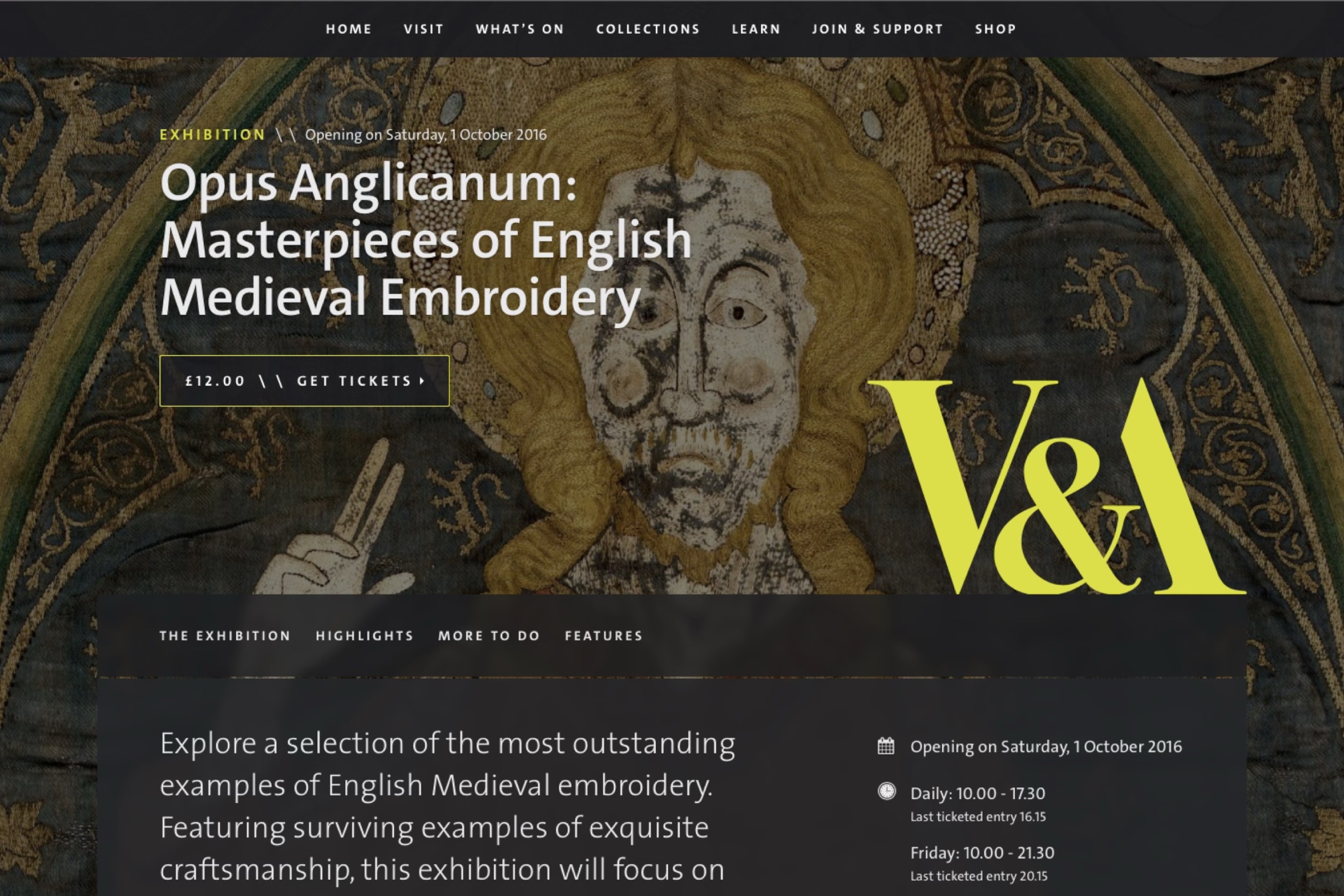
The V&A’s website is the front door to everything the museum does: exhibitions, ticketing, events, membership, retail and education, and research found that 32% of physical visits began on it. Yet the digital media team were hamstrung by poor tools, the technology stack was outdated and cumbersome, and a recently installed CMS was failing. The institution had yet to realise what digital could do to open access to its world-renowned collection.
We proved the commercial case first. Two weeks of small, evidence-led changes to the existing site improved conversion to ticket purchase, click-through to exhibitions and newsletter sign-up. That showed the Board what a redesigned experience could return, won the budget for a new platform, and raised the standing of the digital team inside the institution.
The work was user-centred and grounded in technology, carried by demonstration and prototyping rather than decks and abstract strategy. We worked across the whole institution, from casual visitors to academic researchers, curators to marketing, to understand needs, contexts, behaviours and motivations, and identified four distinct online audiences.
Unlike traditional article-based CMS platforms, we took a radically different approach: the museum object became the primary unit of content. The CMS pulls data directly from the collections database, and every object page can act as a hub linking related exhibitions, articles, events and media: a digital discovery layer around the collection.
A combined V&A and Made by Many team brought business strategy, experience design and software engineering together. The V&A’s in-house developers co-located with us at Diespeker Wharf for nine months, retrained from Python to Ruby on Rails, and became a modern, Agile, user-centred product team. Together we delivered the first release of the bespoke platform in twelve weeks and moved the museum’s hosting from legacy infrastructure to AWS.
Publishing that took two hours fell to fifteen minutes. Page views rose 30% and time on page 20%. In the first year, 750,000 additional museum visits were attributed to the website, a 6.7% increase, and revenue from attributed visits repaid the entire cost of the website, ticketing and online store within two years. The site won Best Website at the IDCA Awards in 2016, and the V&A was left with the skills, tools and leadership to manage and grow the platform itself.
“Our journey with Made by Many has been utterly inspiring: they get product, they get business innovation, and together we’ve built a new website that has been brilliantly received by our online audience. And we’ve learnt a huge amount along the way.”