Reflections from Summer at the Wharf 2026
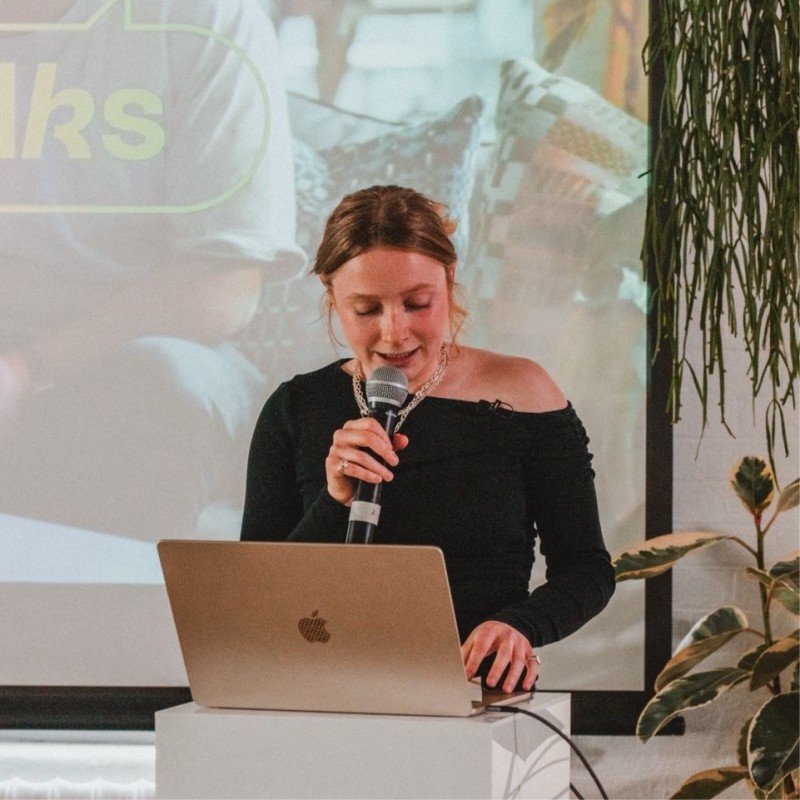
Two seemingly different talks, The Rules that Make Us from Oliver Sweet and From Products to Worlds: What cults, fandoms and video games can teach us about modern brand building from Lucinda Bounsall, with a striking amount in common. Lucinda’s and Oliver’s talks can be understood as the playbook for how brands should behave in an increasingly fragmented culture.
Oliver Sweet is the Head of Ethnography at Ipsos, an author, and keynote speaker.
Lucinda Bounsall is the founder of and Head of Strategy at sibling studio.
When the culture is fragmented
Oliver Sweet’s talk, based on his recent book The Rules That Make Us, opened with the notion–that is likely acutely familiar to us–that culture has come to feel intensely chaotic. His job previously–to anticipate ‘where culture was going’ by looking at the fringes and predicting which subcultures the mainstream would eventually ‘absorb’–has become something quite different, in an environment where there is no coherent culture or linearity.
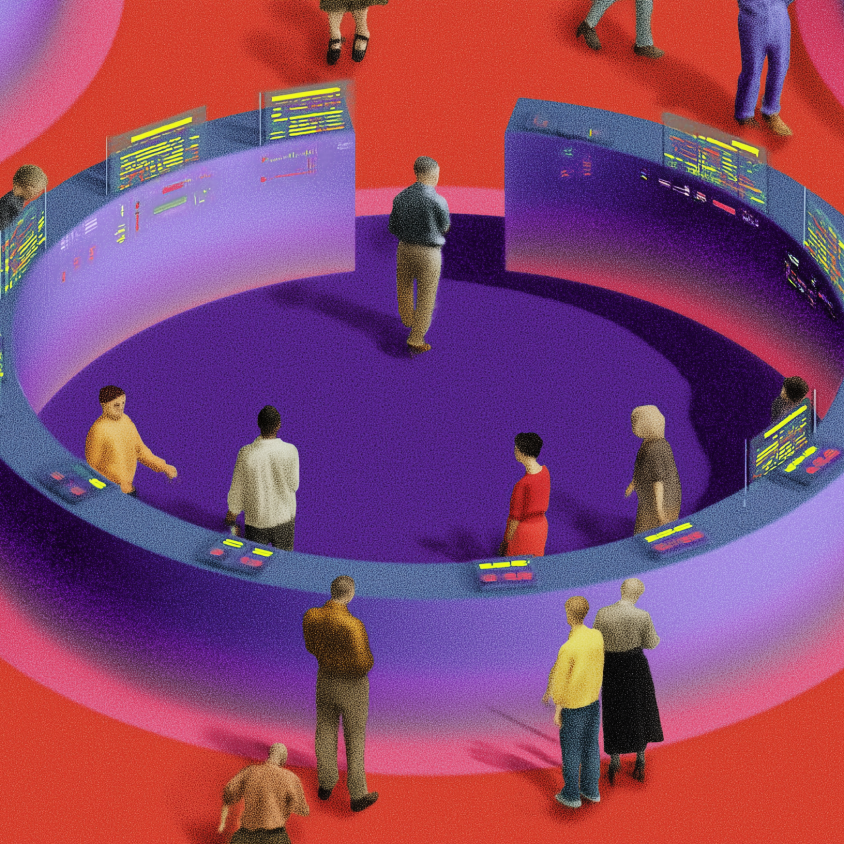
According to Oliver (and as I’m sure won’t come as a surprise), a huge number of people no longer believe the systems around them, political, corporate, institutional, are actually there to support them. Once that belief goes, people start looking for strong individuals to fill the gap instead–someone who says the system is broken and promises to fix it personally. That's his explanation for why populist politicians and manosphere figures get so much airtime, not because their solutions are right, but because the diagnosis–that the system has abandoned you–resonates. And once people start believing they have to solve things for themselves, culture stops behaving like one shared thing and starts fragmenting outward into smaller and smaller groups, each one convinced it's found the truth the mainstream missed.
Oliver’s examples, that right-wing anti-gender ideology is rising, alongside trans-inclusivity initiatives, or that personal optimisation gadgets are taking up a larger and larger share of the market, meanwhile people are advocating for going analog again, losing the wearables, and ‘raw-dogging’ life, reflect the polarised nature of culture at the moment, what he believes is making everything feel so tense and chaotic.
This is felt even more profoundly in an environment where information is disseminated in a way it hasn’t been for a long time. Before around 1800, we lived in what Oliver called an oral society: stories passed peer to peer, campfire to campfire, which meant they had to be memorable to survive at all, accuracy be damned. The printing press created a literate society, where a story could be written down, so it didn't need to be memorable, it needed to be right. Oliver's claim is that we've now moved into a third phase, a symbolic society, which behaves eerily like the oral one: stories move peer to peer again, at social media speed, and once again they have to be memorable and compelling to survive the scroll. What they no longer have to be is true. The benchmark for success shifted from speaking the truth, to making impressions. Literally.
AI makes it worse
Perhaps Oliver's most alarming data point involved AI directly. Ask a large group of people an open question, and you get an enormous scatter of different answers and vocabulary. Ask an AI the same question, and the scatter collapses toward a much smaller, safer, more centred cluster, because the model is optimising for the answer it thinks you'll find most satisfying, not the widest possible range of truth. Push it to elaborate further and the cluster drifts, but it drifts toward you, not toward the world.
His conclusion: if we're already retreating into smaller cultural tribes, AI trained to please rather than challenge will only make each tribe more “bulletproof”, more convinced of itself, because it will only ever feed people more of what they already believe. He called the destination ‘digital narcissism’, and it's a genuinely uncomfortable phrase to sit with, not least because it points at all of us, not some other, more gullible audience. Views are becoming more extreme and the subliminal messaging which enforces them more effective, which has unique consequences for brand-building.
Brands used to sell things, they need to sell belonging
If Oliver’s talk was the macro: what ‘culture’ looks like (even if that is the absence of a unified shape), Lucinda’s could be understood as the micro: what brands can do about it. Except, Lucinda's answer was to look away from advertising entirely, to cults, religions, football, video games, systems with little in common except that they're extraordinarily good at making people feel like they belong to something.
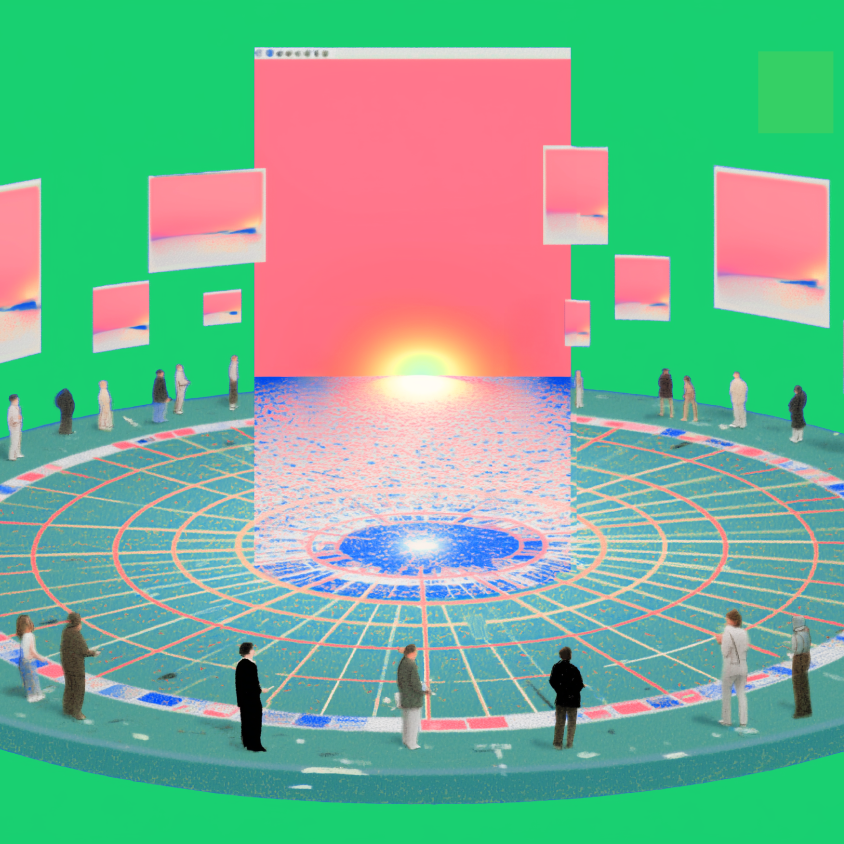
Lucinda opened her talk at Summer at the Wharf with a neat history of what brands have historically competed on. First it was function: does this work, can I trust it. Then it was emotion: brands stopped selling shoes and computers and started selling a way of seeing yourself. Lucinda's argument is that we're now well into a third phase, where brands are experienced culturally, continuously, through feeds and comment sections and memes, rather than through the occasional advert. Brands live inside–and are part of building–culture now. They don't get to stand outside it and broadcast to it anymore.
Her argument, a compelling one, is that cultural relevance, as most agencies practise it, has been reduced to responsiveness: reacting quickly to a trend, hopping on a meme, essentially being (or trying to be) visible. The trouble is that participation of that kind doesn't create the meaning which holds your brand in the consumer’s imagination, enduringly, over time. In fact the opposite is true–it creates sameness or indifference, the exact opposite of what it's chasing. And the tell is always the same: a wave of brands jumping on the same viral moment within days of each other, saying nothing distinctive about any of them individually and in the hope of reaching an empty virality.
Instead, she argued, there needs to be a shift from brand-building to ‘world-building’–like the institutions we know to endure through time and space. More than ever, the chaoticness Oliver describes makes finding footing as a brand more difficult, so essentially that foot needs to be more deeply entrenched (in other words, immersive and omnipresent) in consumers' lives to survive it.
What brands can learn from religion
Religion's trick, Lucinda argued, isn't the belief itself–it's the repetition. Prayer, pilgrimage, the hymns you sing every week, in religion participation matters more than observation, because you don't build belonging by watching something from the outside, you build it by doing the same thing, together, again and again. Ritual simultaneously creates the impression that these systems have existed before you, and will continue to live on after you. In short, they’re solid and enduring you can fall back on, with rich histories which work to fortify them through collective memory and identification.
Football runs on a similar engine: a shirt is just an expensive polyester top, functionally speaking, but symbolically it's a public declaration of allegiance, and the club's folklore, the against-the-odds title win, the miracle comeback, gives the whole thing a sense of having existed before you and continuing after you're gone.
Video games teach the final piece: people don't just want stories to inherit, they want a role to play inside them, which is why millions of people happily take on a second job, as a farmer or a bank robber or a nightclub owner, inside a world that only exists on a screen.
Despite involving transactions, participation in these ways feels distinctly not transactional. These practices become part of one’s world in ways that brands can take inspiration from.
‘Remixing’ meaning
One of the most crucial differences between brand-building then (perhaps pre-internet, more like pre-social media), and brand-building now Lucinda argued, was that the meaning of your ads, or your product, or your stance, is decided by your audience more than ever before. Ads whose meaning was once relatively static, interpreted and accepted, is now negotiated in real time by spectators. And the intended meaning the ad had for your brand can be miles removed from what its new meaning becomes.
The consequence is that because meaning today gets interpreted and remixed in public by an audience the brand doesn't control, a brand that has nothing coherent to fall back on gets its meaning decided for it. In this environment, chasing every trend isn't cultural relevance, it's a quick way to lose brand identity altogether. Add to this a scattered culture with no coherent ideology, meaning is negotiated and renegotiated by audiences vastly differently across the population and in ways that are hard to predict.
All this led her to think about the kinds of institutions which are enduring, that retain meaning over time, and garner loyalty. Her conclusion–it’s the ones that don’t just brand-build but ‘world-build’: video games, football fandom, and religions to name a few. They build worlds through what she describes in her six-part framework: “Rules, Roles, Objects, Symbols, Rituals, and Lore”.
For brands this means creating something stable and encompassing that doesn’t falter with every viral discussion about an ad’s meaning. These, in essence, aren’t campaigns, but emotional systems people can participate in, find meaning through, and as such, which have depth that can withstand public debate.
Brands carry responsibility
Put the two talks side by side and the old idea, that culture is a media space you can be relevant in for a news cycle and then move on from, looks obviously wrong. Culture can’t be the weather brands react to. Lucinda's talk showed how to build meaningfully inside that system. Oliver's showed what happens when nobody's building meaningfully, and the vacuum gets filled by whoever shouts the most memorable, least accurate story loudest.
Neither speaker was arguing that brands should retreat from culture, but to evolve. Lucinda's closing line was that world-building isn't really about marketing at all, it's about the same fundamental human need to make meaning out of the fragmented and chaotic world Oliver diagnosed. World-building brings with it a depth that acts as a safeguard against the fleeting and transient interpretations audiences might have about your brand–good and bad. It builds a brand identity that is fortified and memorable for the right reasons, not because of a viral meme that garnered polarisation.
Oliver's own advice on trust, when asked, wasn't about clever positioning, it was about roots. Brands earn belief slowly, over years, and lose it fast the moment they start behaving like the institutions people have already stopped trusting. He named three signals of that kind of overreach directly: throwing institutional weight around, leaning on their history as though longevity alone earns loyalty, and displaying the kind of inflated pride that assumes people will simply believe you're the best. These roots aren’t nurtured by those signals, but through consumers’ participation in the emotional systems Lucinda spoke about, through symbolism, ritual, shared memory and lore.