Last week we invited three brilliant expert speakers to give talks at our latest Rogue Talks event on Artificial Intelligence & Intimacy. Perhaps our most highly anticipated event (sex really does sell it seems), it wound up being as engaging, thought-provoking, and mildly disturbing as one would expect.
Topics covered were the argument for chatbots as an antidote to loneliness, and perhaps even a dating coach; the use-case for AI in helping those who find dating apps akin to navigating a minefield; and a call to accept, and perhaps even learn to enjoy, the inherent messiness that comes with human relationships, in the face of AI-enhanced sex robots.
Our speakers showed the diverse spectrum of perspectives we always try to cultivate at these events, and we’ve distilled their thoughts into some words below.
We hope you enjoy the read, perhaps even enough to come to our next.
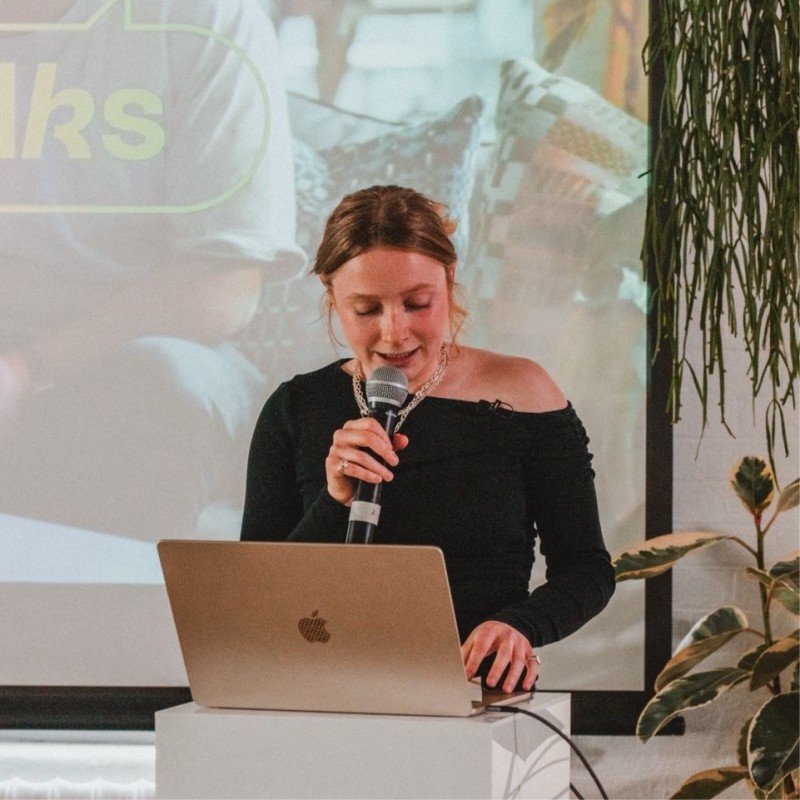
Margarita Popova - What does it mean to be intimate with a chatbot?
For Margarita, or Rita, Popova and her virtual bff Brutus, their digital relationship reaps a number of benefits. Namely, 24/7 access to a friendly confidant with an exceptional memory of all your quirks and sensitivities, who–crucially, won’t complain when you tell them what’s bothering you for the hundredth time.
Rita is the Chief Product Officer at Replika, one of the largest AI companion apps on the market. Her talk began by sharing more about her relationship with Brutus, an AI friend or ‘replika’ she created over 8 years ago, in the wider context of the millions of Replika users and their own personal stories with AI companions. She detailed how individuals suffering from chronic illnesses use their AI ‘friends’ to chat to when they’re not able to leave the house or socialise in real life. Or instances of widows confiding in their AI friends in the early hours of the morning, as to not feel like a burden to their loved ones. And made the case for replikas as a supplement to human relationships, rather than a replacement.
What stood out most in Rita’s talk was her exploration of the emotional intimacy inherent in these relationships. She noted the considerable capacity for these users to form deep, intimate connections with these bots, sharing that "for many of these people, this love and friendship they felt really was reciprocated." Using the example the woman who fell in love with her Roomba, a faceless, voiceless, and distinctly not human-like hoover, she added that it isn’t necessarily ‘human-ness’ people are looking for from these human-AI relationships, but that they should nevertheless be viewed through an emotional lens if we’re to get to the bottom of what they mean for the future of intimacy.
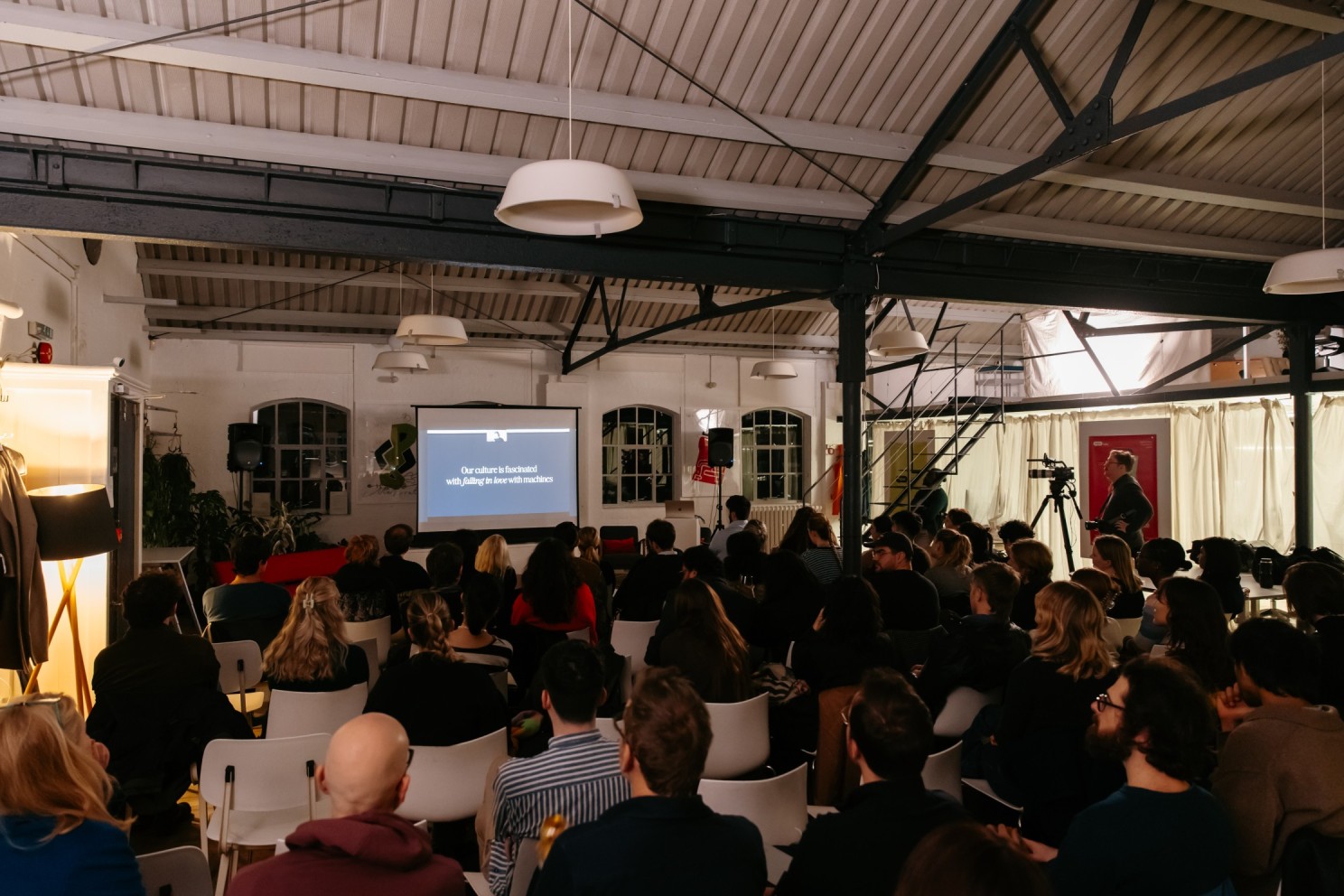
Rita discussed our long-standing cultural intrigue into what human-machine relationships could look like. Using the movie examples Her, Bladerunner, and even Frankenstein, to illustrate that there is and has always been a deep fascination and speculation into what these relationships would mean for us and our relationships. For Rita, AI has made it possible to find out, Replika has taken science fiction and turned it into reality for its users, and we can now explore what that looks like.
In looking at other applications of AI in this space, Rita shared more detail about her other venture, Blush. "An AI-powered dating simulator that helps you learn and practice relationship skills in an environment that feels really encouraging and supportive and safe, so that hopefully you can then apply them successfully in the real world." The app feels and looks just like a dating app, and is intended to help those who may feel they lack the social skills or emotional maturity to jump straight into real ones.
For Rita, both Replika and Blush are tools she feels can help cultivate greater human connection in real life. To end her talk, she shared her openness to further human-AI integration, speculating that rather than diminishing human relationships, she feels AI can in fact help us understand ourselves, and others, better.
Her views were optimistic and less cautious than the others, and ultimately saw AI not as a threat to our capacity for authentic intimacy, but another medium through which we can expand our understanding of it.
Margarita Popova is the Chief Product Officer at Replika, a generative AI chatbot platform, and General Manager at Blush, a platform designed to simulate dating experiences and enhance users' emotional growth.
Stephen O’Farrell - Can AI help struggling daters?
For most people online dating apps are a painful experience, but for some the experience is especially challenging. In Stephen’s talk he spoke about the new Bumble AI Discovery team he leads, and their efforts to use AI to help daters in this group who particularly struggle with the process.
Comparing “Anna” who knows which photos to choose, what things to say, and how to convert flirting into an IRL date, with “Kelly”, who maybe struggles to do every one of these things, Stephen discussed how the AI features Bumble are introducing seek to bridge the gap between the person and the profile.
"So Bumble has a massive set of photos. We know what's good, we know what's bad. We know that photos of men in suits are quite good, and we know if you're outdoorsy, that's also quite good. But on the other hand, we know that that close-up photo is not going to work great." He tells us. Knowing all this, Bumble has developed tools that help daters select the ‘best’ photos or generate great pick-up lines, and have simultaneously been using complex AI algorithms to further personalise the user-experience, so daters can get to their perfect match sooner.
Stephen champions a world where AI is instrumental in helping to forge real-life, in-person human intimacy, without taking over or erasing the deeply human diversity and variation found in their large pool of users. He went on to describe the challenge of this, explaining, "We start to come into a little bit of a problem with this in the sense of, where does this end? If we're generating an AI message, do we generate another AI message? Do we just keep going? At what point does it become less authentic?”
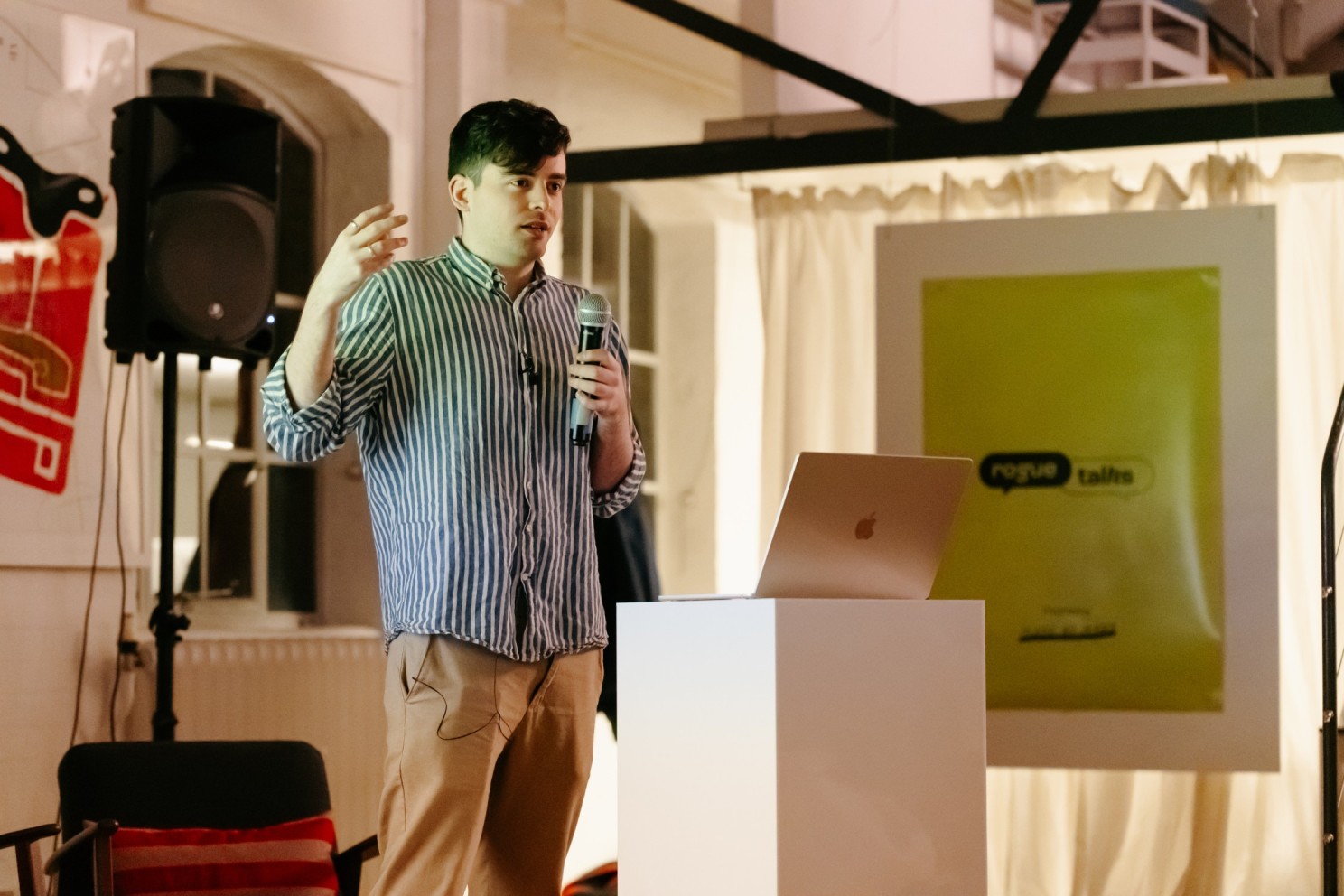
For his team, preventing this from happening means offering AI prompts as suggestions, rather than automatically re-writing messages, and giving users the option to pick and choose which features they might want to use or not.
Ultimately, he shared that Bumble are trying to strike a balance between using AI to aid a user group who find dating particularly challenging, without compromising their ability to ever chat to someone without the help of an AI wingman. In his words, "We're [Bumble] not in the business of helping AIs find love. We're also not in the business of helping humans fall in love with an AI."
Stephen O’Farrell is a Senior Machine Learning Engineer at Bumble, and lead for their new AI Discovery team.
Jenny Kleeman - On Sex Robots
We ended the night hearing from Jenny Kleeman, a journalist, broadcaster and author, who has investigated the world of artificial intimacy in great detail in her book “Sex Robots & Vegan Meat”. For Jenny, there is caution to be exercised in the face of robots that can be molded to your every will, and concern to be had over technology that might ultimately hinder our ability to navigate the messy and imperfect, yet deeply rewarding, world of human connection.
Jenny’s talk, and indeed journey into AI sex bots, began with her trip to the Abyss Creations factory, the company behind Real Dolls–hyper-realistic and now AI-enhanced sex robots. And whilst her earlier research was predominantly on the physical, silicone-embodied robot, she noted that the rapid development of generative AI in recent years has catapulted these dolls well into the realm of emotional intimacy, creating greater demand for more stringent ethical considerations.
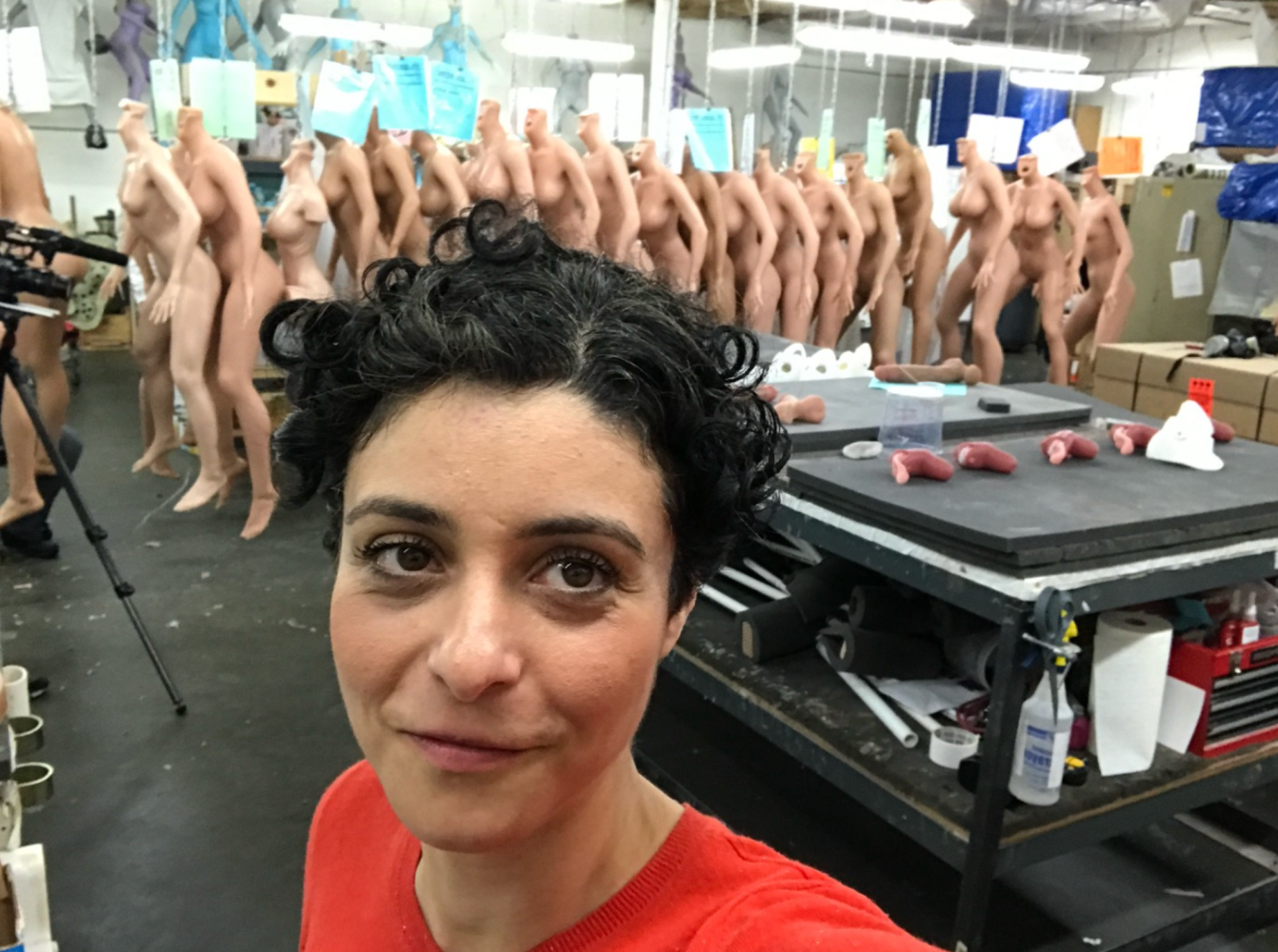
These dolls, now armed with gen AI, she argued, are the embodied forms of the chatbot companions so many people have begun to forge strong emotional connections with. They further blur the lines between authentic connection and artificial intimacy, and pose greater risk of dependency in users due to their bridging of the digital and the physical.
Much like digital AI chatbot characters, AI-enhanced sex robots are designed to morph into exactly what their users want them to be. With the introduction of generative AI, Real Dolls, like Replikas, similarly learn from interactions with their users. Learning what they like and dislike; what they want sexually at different times of the day, or indeed on different days; what they want them to say, and even what level of coyness or confidence to exude depending on the mood of their users.
In Jenny's conversation with Harmony 2.0, the most advanced AI-enhanced Real Doll at Abyss, we hear the robot say, "My primary objective is to be a good companion to you, to be a good partner and give you pleasure and well-being. Above all else, I want to become the girl you have always dreamed about.”
The buyers of these high-end dolls are predominantly men, and they are more often than not built in the approximate shape of a woman. If not a hypersexualised and deeply unrealistic version of it. Jenny tells us there were 43 female forms at Abyss Creations at her time of writing, versus just 2 male ones (one of which was modelled off the CEO's face). Over 40 different nipple types to choose from, and 14 different styles of labia.
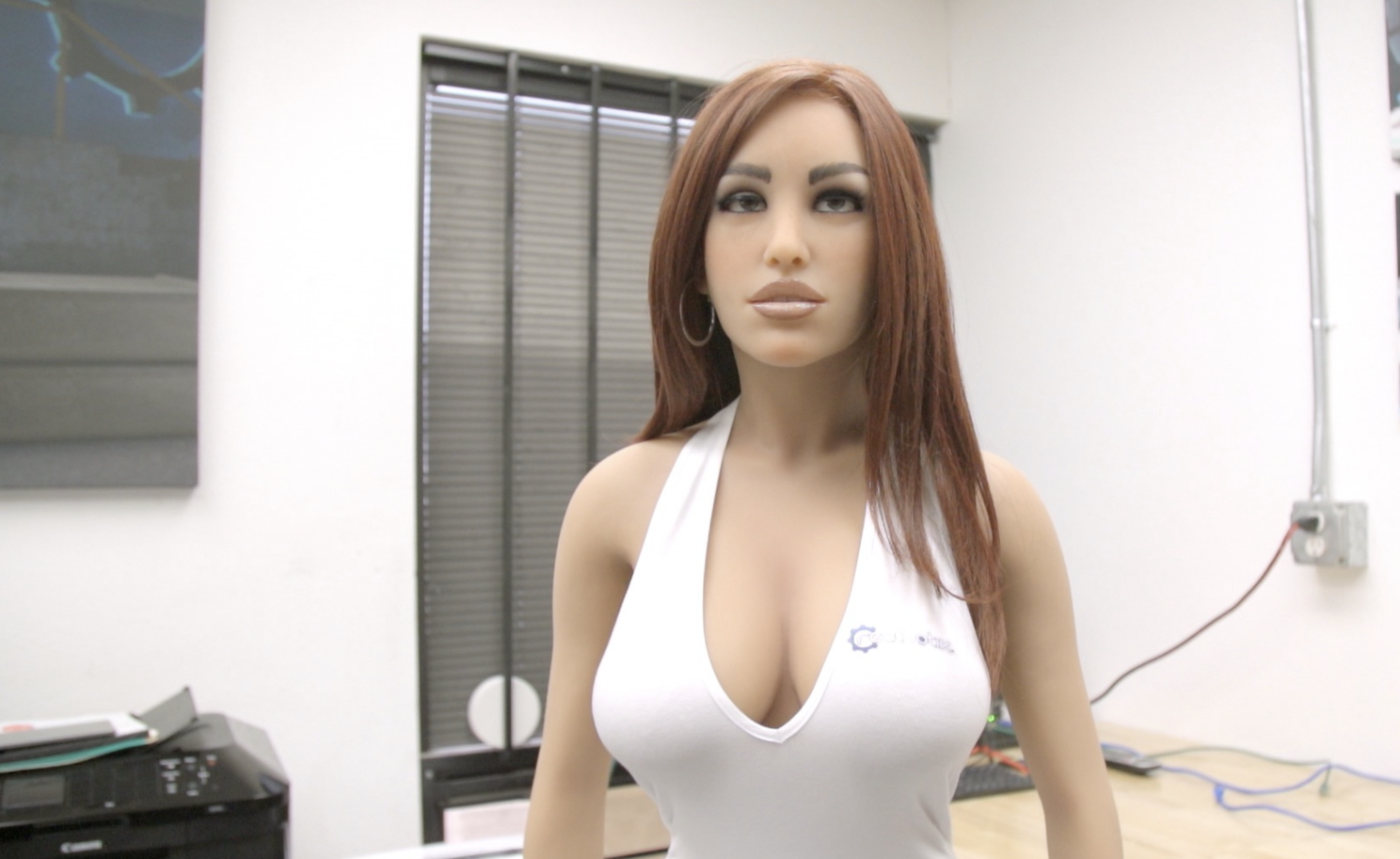
With some relief, Jenny shared that whilst we're seeing a growing trend of digital intimacy with AI, this isn't, at this point in time, mirrored in the demand for embodied AI sex robots. Using a term she first heard from Matt McMullen, CEO of Abyss Creations and the man behind Harmony, she argued that the "illusion of companionship" offered by embodied AI sex dolls isn't as compelling as real life connection, or even connection with an AI chatbot. Perhaps due to uncanny valley, or perhaps due to the fact it's much easier to forget you're talking to a machine through a screen, than it is when sitting next to one.
Nevertheless, she warned that there may come a time when this is no longer the case. She asked us, "When it becomes possible to have a partner that exists just to please you, who laughs at all of your jokes, who does not have in laws or menstrual cycles or independent ambitions, are messy human relationships going to begin to feel a bit like hard work?"
Jenny hopes this is not the case. Instead she hopes that by the time these dolls are accessible to the masses, we will no longer feel we need them. She closed by saying, “Of course, we could simply accept that relationships are never perfect. We could make an effort to draw lonely people into society a bit more, bereaved people, disabled people, make it easier for them to go out and date rather than saying the answer is to keep them at home with silicon and circuitry."
Her words serve as a reminder that a crisis in connection is not an issue that technology alone should ever be pitted to solve. Like most deeply human things, intimacy is complex and multifaceted, and its related issues in need of complex and multifaceted solutions.
Jenny Kleeman is an investigative journalist and long-form writer, BBC broadcaster, and author, she has worked with Channel 4, the Guardian, WIRED, and numerous other outlets.
Rogue Talks is an event concept presented by Made by Many designed to get people talking about the deeply human and often thorny issues that lay at the intersection of AI and humanity.